
JA at the Skoll World Forum 2026 and Hosting Education House Oxford
Guest post by Howard Leong, Research Strategist, JA Worldwide
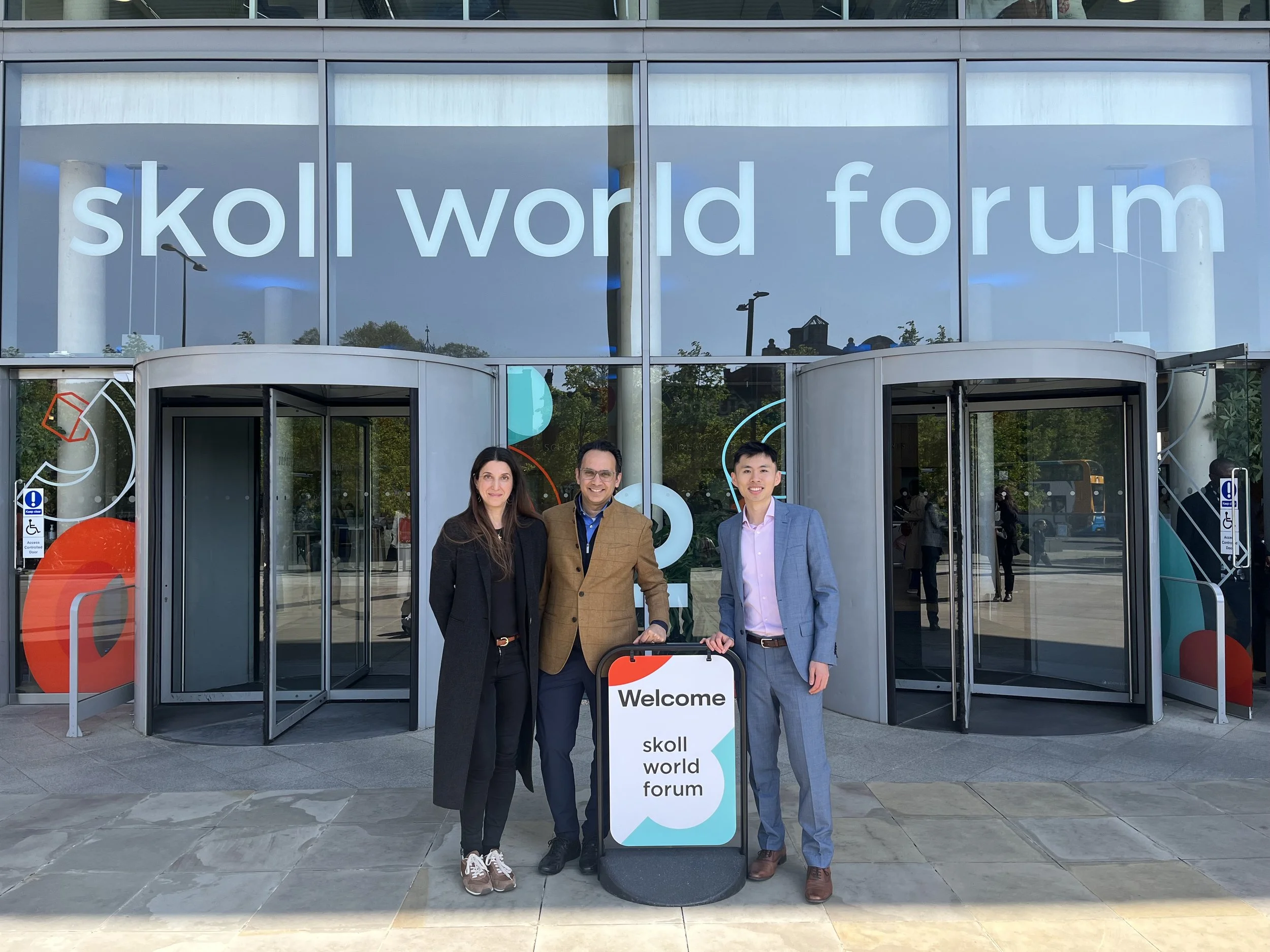
From the left: Ana Martiningui (Vice President of Global Development, JA Worldwide), Asheesh Advani (President and CEO, JA Worldwide), Howard Leong (Research Strategist, JA Worldwide)
I’ve never thought of myself as a social entrepreneur. Like many at JA, we simply like asking the right questions and finding the right problem to solve. Increasingly, the most interesting problems that confront us are wicked ones—complex, ill-defined social issues that are difficult or impossible to solve due to incomplete, contradictory, and changing requirements. We see our world’s most pressing problems requiring innovative thinking, complex stakeholder management, and a community of excellent practitioners to compare notes on the mechanisms that scale. Sometimes, we benefit from looking further afield and listening deeply to the beneficiaries. Solutions may just be hidden in plain sight.
At the 2026 Skoll World Forum, social entrepreneurs gathered to hold such conversations and take collective action. The annual forum brings together 1,500+ social entrepreneurs, nonprofit leaders, and philanthropic foundations from 90+ countries. JA has been involved in the community for many years. Most notably, our Middle East and North Africa office (INJAZ Al-Arab) was one of the three Skoll Awardees in 2009.
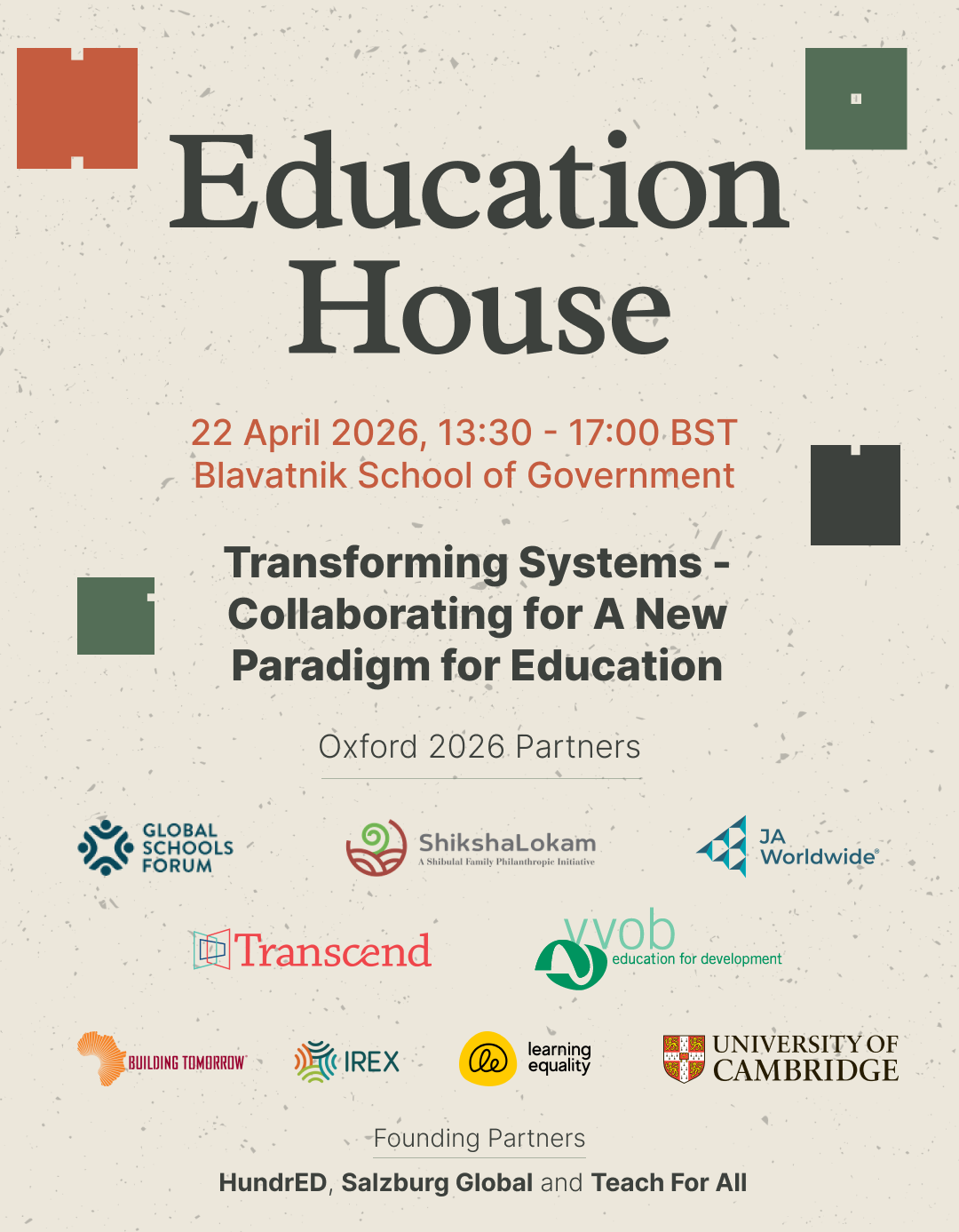
This year, Simi Nwogugu, President and CEO of JA Africa, represented us at the main event while Asheesh Advani, CEO of JA Worldwide; Ana Martiningui, Vice President of Global Development, JA Worldwide; and I hosted conversations at Education House at the Blavatnik School of Government, University of Oxford.
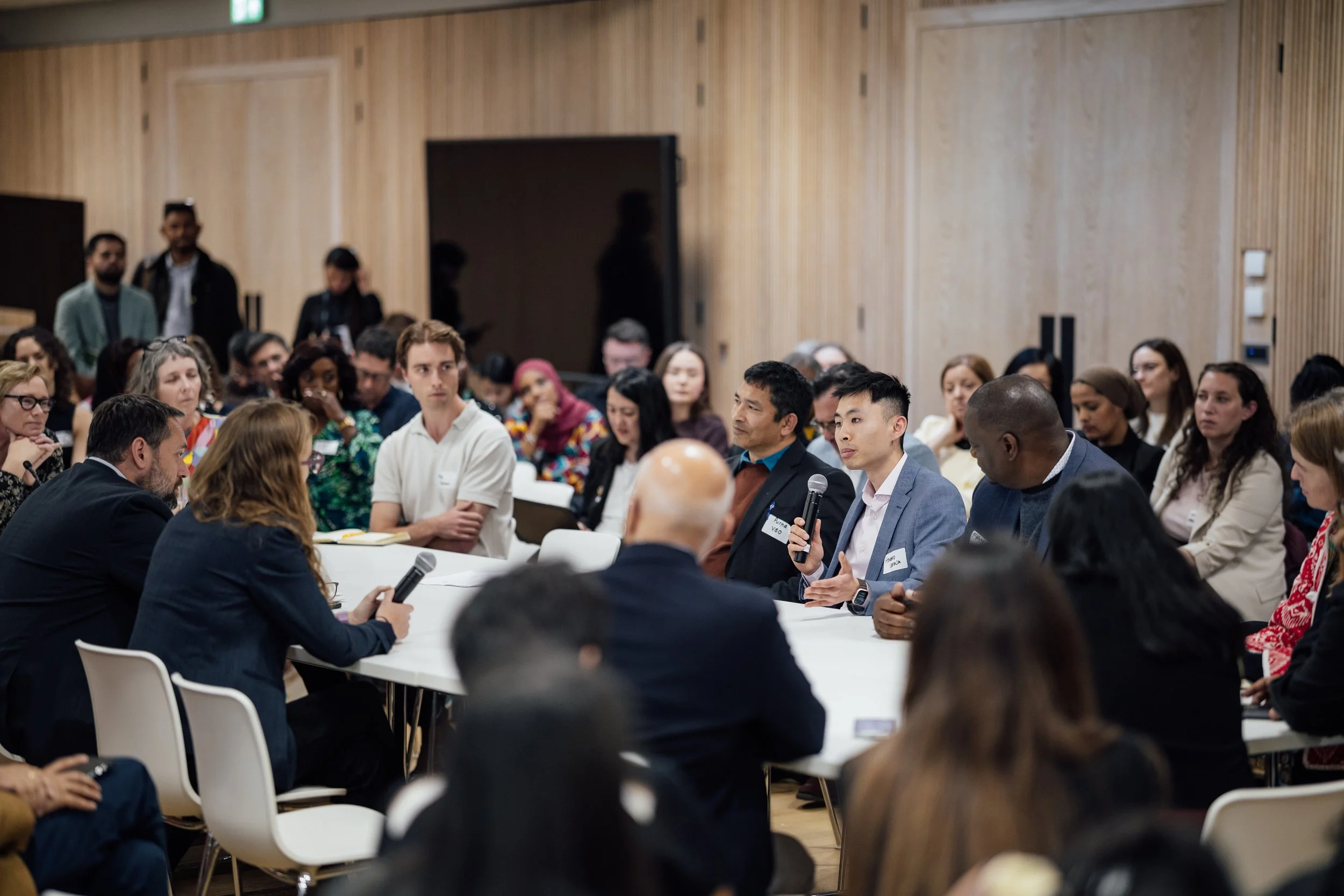
Long Table discussion on how we can accelerate widespread shifts in the purpose of education towards this new paradigm.
On April 22, JA Worldwide co-convened Education House Oxford, bringing together education leaders, practitioners, and philanthropic actors from across the globe under the theme Transforming Systems: Collaborating for a New Paradigm for Education. The event was structured around three interlocking questions: how do we shift the purpose of education toward building agency, creativity, and critical thinking in young people? How do we build the collective leadership needed for systems change? And how can philanthropy catalyze the kind of long-term, locally-rooted transformation our moment demands?
What made Education House distinct was its format, which was deliberately designed to be egalitarian and participatory rather than hierarchical. Session 1 used a “long table” discussion format, borrowed from the world of theatre, where any attendee could pull up a chair and contribute equally alongside invited discussants. Asheesh spoke about the problem of collective action among educational organizations and contributed insights on how people are the mechanism for accelerating cohesion toward a shared purpose of education.
Session 2 broke attendees into six small-group conversations on everything from rebuilding trust in polarized systems to reimagining how we design learning environments. Ana co-facilitated the Trust and Polarization session with Jane Mann, Managing Director of the Partnership for Education and Education Director of the International Education Group at Cambridge University Press & Assessment. We presented our global research on polarization trends in 100 countries over five decades, and participants shared their perspectives on how to bridge the trust gap with stakeholders ranging from funders to parents. One interesting insight for building trust is to look to behavioral science research on the attribution fallacy, a cognitive bias in which people overemphasize personality-based (dispositional) explanations for others' behavior while underemphasizing situational factors.
The day ended with a fireside conversation with philanthropic leaders from the Lemann Foundation, Malala Fund, Bill & Melinda Gates Foundation, and others, wrestling with one of the sector's most persistent tensions: how to fund deep, slow transformation while responding to urgent, fast-moving crises.
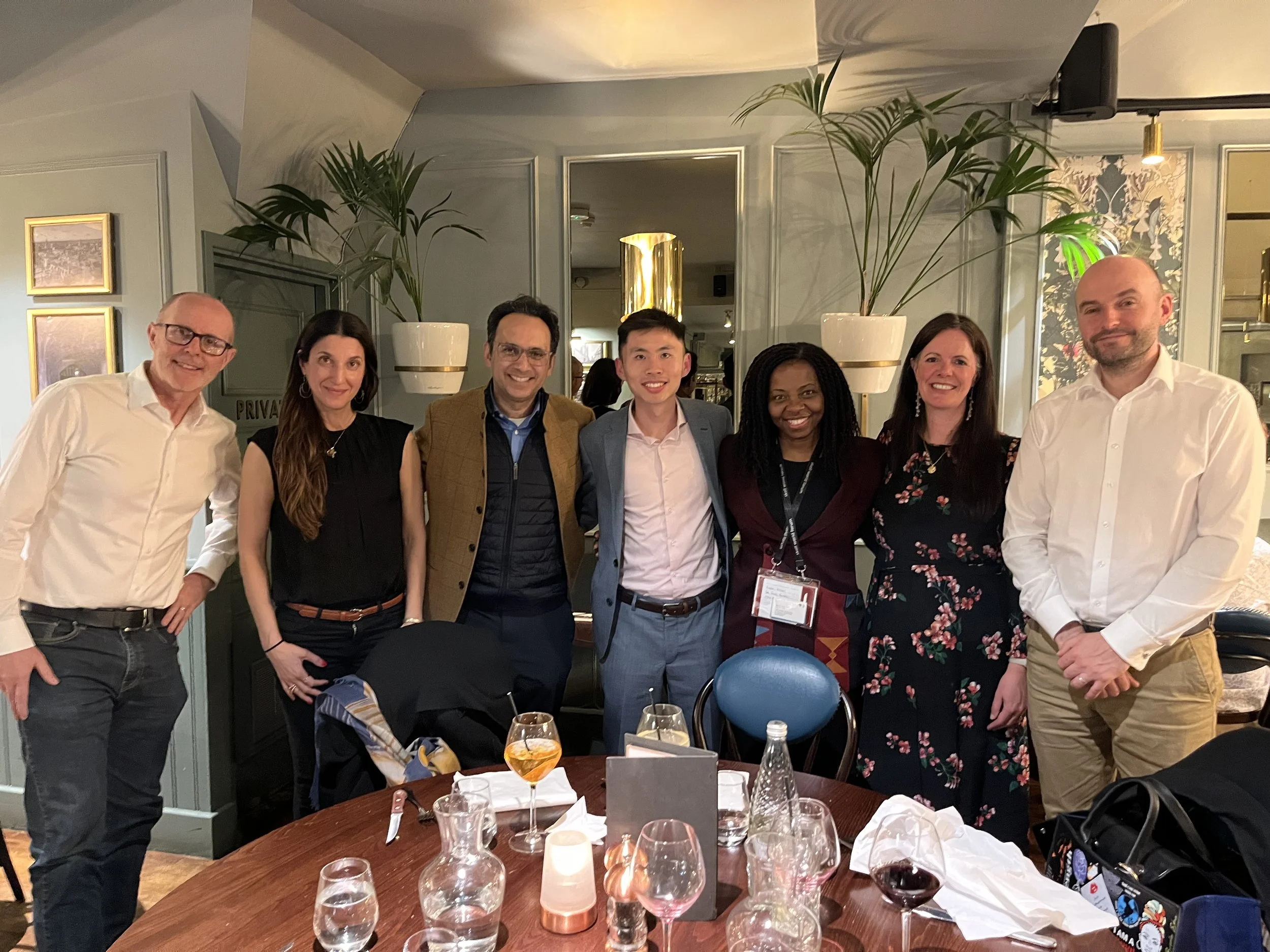
From left: Tim Stanbury, Ana Martiningui, Asheesh Advani, Howard Leong, Simi Nwogugu, Sarah Poretta, William Humphrey.
The day ended with a private dinner joined by William Humphrey (Global Council Member, JA Worldwide and Founder/Chairman, Oxford Royale), Sarah Poretta (CEO, Young Enterprise UK), and Tim Stanbury (Director of IT and Finance, Young Enterprise UK). We’d like to thank our partners who took the time to engage with us at the event: the Foreign, Commonwealth & Development Office, the What Works for Global Education Hub, the Raspberry Pi Foundation, the Yidan Prize Foundation, and many more.
Being part of a room full of passionate educationalists is deeply invigorating. Everyone in the audience had something to contribute to advancing education globally. Perhaps each one of us is a social entrepreneur in our own right. A gentle nudge to a system, however small, when compounded, leads to a different direction.